Wyoming Trust Law Changes: Current 2026 Guide
Review Wyoming's current trust code, the 2025 SF0097 revisions, effective-date rules, and action items for trustees, advisers, and existing trusts.
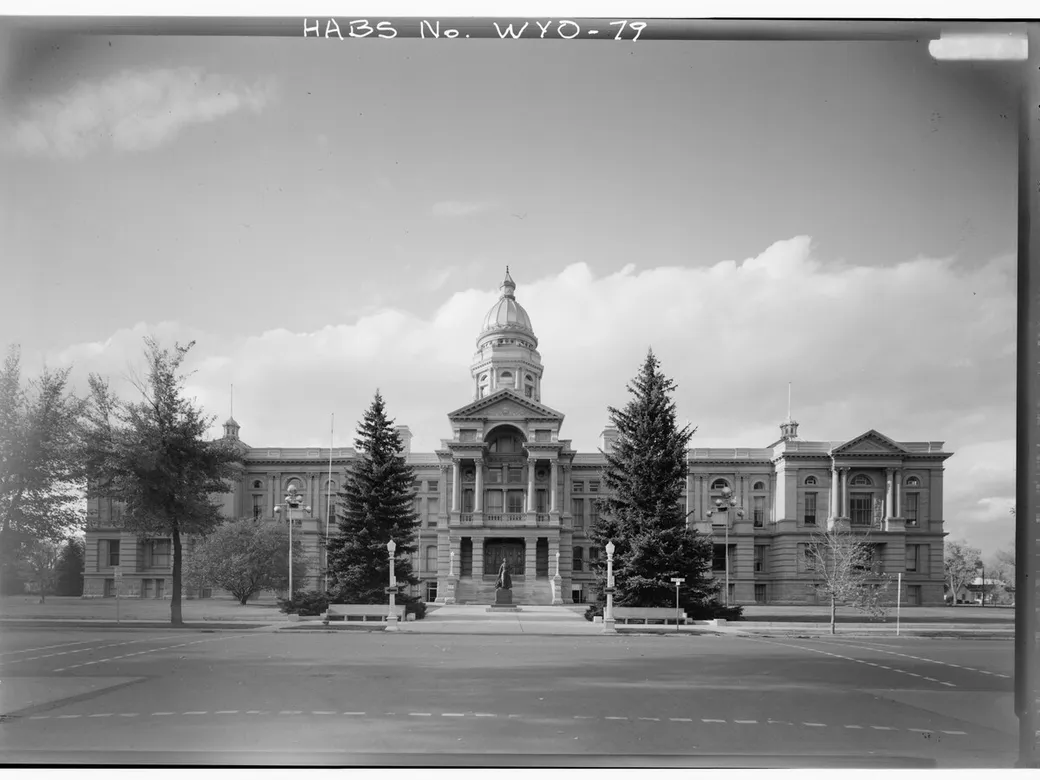
Wyoming questions in this guide
- Put the enactment on a reliable timeline
- Read the qualified-trustee clarification narrowly
- Rebuild the notice list before a court proceeding
- Separate purpose-trust duration from ordinary dynasty planning
- Add annual tax-election decisions to administration
- Build a controlled grantor-tax reimbursement process
- Do not skip the applicability clause
- Convert the update into a working checklist
The safest way to follow Wyoming trust legislation is to start with the law now in force, then work backward through the session law and enrolled bill. That order matters. Bill summaries are useful navigation aids, but a trustee making a current decision needs the codified text, the correct effective date, and the provision governing which trusts receive the change.
For this August 30, 2026 review, the official Title 4 compilation says it includes legislation through Wyoming’s 2026 Budget Session and statutes effective July 1, 2026. The principal recent enactment expressly titled “Trust code revisions” is 2025 Senate File 0097. It was signed March 5, 2025, became Senate Enrolled Act 0066 and Chapter 115 of the 2025 Session Laws, and took effect July 1, 2025.
Put the enactment on a reliable timeline
| Legislative checkpoint | Verified information |
|---|---|
| Measure | 2025 SF0097, Trust code revisions |
| Final enactment | SEA 0066; Chapter 115, 2025 Session Laws |
| Governor’s signature | March 5, 2025 |
| Operative date | July 1, 2025 |
| Express applicability | Trusts created on or after that date, or becoming subject to the Wyoming Uniform Trust Code on or after that date |
| Codified sections amended | Wyo. Stat. §§ 4-10-103, 4-10-109, 4-10-410, and 4-10-816 |
This sequence supplies three different pieces of evidence. The digest confirms the measure’s legislative history. The enrolled act records the language enacted and its transition clause. The current statutory compilation shows where the provisions sit today. A sound file should preserve all three when the effective date could affect a decision.
Read the qualified-trustee clarification narrowly
SF0097 made a narrow textual clarification to the “qualified trustee” definition in § 4-10-103. It changed “which” to “that” in the regulated-financial-institution clause and clarified the settlor-through-an-entity language in subsection (C). It did not add a Wyoming-office or principal-place-of-business requirement.
The current definition provides several routes, subject to subsection (C). A natural person may qualify by Wyoming residence. Subsection (B) also covers a person authorized by Wyoming law to act as trustee or a regulated financial institution that conducts at least one listed activity in Wyoming: custody, trust records, fiduciary-return preparation, or other material administration. Before a transfer, identify the exact route and match the supporting facts to the trust agreement and service contract.
Trustee qualification and principal administration under § 4-10-108 are separate analyses. Both should be monitored because a provider merger, relocation, delegation, custody change, or transfer of tax-return responsibility may alter the facts after the first funding date. Keep dated evidence of the trustee’s status and rerun the analysis before a later contribution rather than treating the original onboarding result as permanent.
Rebuild the notice list before a court proceeding
New subsection § 4-10-109(e) addresses notice to interested persons in a judicial proceeding concerning a trust. A court order cannot be evaluated only by reading the requested relief; the notice and representation path helps determine whose interests may be bound.
For a petition filed under the current code, diagram the current beneficiaries and fiduciary offices. Identify minors, incapacitated persons, unborn or unascertained interests, and anyone whose status changed through death, disclaimer, distribution, appointment, or termination of an interest. Then test representation under Article 3 for conflicts. A service list copied from an old accounting, modification, or family spreadsheet is not a current legal analysis.
The working file should show why each person receives direct notice, receives notice through a lawful representative, or is outside the applicable class. That record is especially valuable when a long-duration trust has several beneficiary generations.
Separate purpose-trust duration from ordinary dynasty planning
The revision to § 4-10-410 removes common-law duration limits, including an otherwise applicable common-law perpetuities rule, for a qualifying noncharitable purpose trust. This type of trust has no definite or definitely ascertainable beneficiary and depends on the statutory rules for enforcement and use of its property.
That amendment should not be paraphrased as “all Wyoming trusts are perpetual.” Wyoming’s ordinary duration analysis remains property-sensitive under § 34-1-139. Real property held in trust follows the common-law track described in subsection (a), while qualifying non-real property in a post-July 1, 2003 trust may use the period of up to 1,000 years in subsection (b).
A purpose-trust document still needs an intelligible purpose, an enforcement mechanism, succession, rules for property no longer needed, and an endpoint or disposition method. The duration amendment removes one obstacle; it does not supply the missing governance.
Add annual tax-election decisions to administration
SF0097 added § 4-10-816(a)(xxxi), confirming trustee power to make federal, state, and local tax elections, and subsection (xxxii), addressing whether principal distributions include net realized capital gains and losses in distributable net income for a taxable year under Internal Revenue Code § 643(a).
These are powers, not automatic answers. The trustee should coordinate the governing instrument, fiduciary-accounting treatment, distribution authority, realized gains, beneficiary circumstances, tax preparation, and any authority assigned to a tax or distribution adviser. The decision belongs on a pre-return calendar so it is considered while distribution and reporting options remain open.
Record the authority used, the alternatives considered, any direction received, and the intended reporting treatment. Inclusion of capital gains in distributable net income is a federal tax matter with technical requirements; Wyoming’s grant of power does not assure federal acceptance of a particular implementation.
Build a controlled grantor-tax reimbursement process
Section 4-10-816(a)(xxxiii) now permits an eligible trustee, unless the instrument says otherwise, to pay or reimburse a person treated as the owner under 26 U.S.C. § 671 or a comparable law for tax attributable to trust items. The statute makes the power discretionary. It excludes a trustee who is the settlor or a related or subordinate party to the settlor under § 672(c), and it lets an independent trustee irrevocably elect out in writing.
The Wyoming text also says the existence or exercise of the power does not, by itself, make the settlor a beneficiary, pull trust property into the settlor’s estate, or permit a settlor creditor to compel or attach the payment. Section 4-10-816(b) separately restricts exercises that would impair listed federal tax benefits and protects a good-faith exercise from liability.
Operationally, the trust needs more than a clause. Determine who is eligible to decide, whether the document prohibits or mandates reimbursement, how tax attributable to trust income will be calculated, which federal and state payments count, how duplicate reimbursement will be prevented, and how liquidity and beneficiary effects will be weighed. Preserve the calculation and discretionary record. Federal estate- and gift-tax treatment remains a federal-law question even when state law describes intended consequences.
Do not skip the applicability clause
Section 2 of the enrolled act applies the amendments to a trust created on or after July 1, 2025, or becoming subject to the Wyoming Uniform Trust Code on or after that date. The second branch is important for older and migrated trusts, but it is not permission to assume every preexisting Wyoming relationship automatically acquired every new provision.
Review the execution date, amendments, prior governing law, situs history, place of administration, court orders, and any election that brought the trust under Wyoming law. If a trustee wants to use a new reimbursement power or rely on the purpose-trust amendment, the file should contain a specific transition analysis.
Convert the update into a working checklist
- Save the current Title 4 version, session-law chapter, enrolled act, and digest with the review date.
- Confirm qualified-trustee facts before each qualified transfer and after provider changes.
- Refresh interested-person, beneficiary, and representation maps before judicial action.
- Apply the purpose-trust duration amendment only to the trust category it addresses.
- Calendar tax elections and capital-gain decisions before year-end reporting is fixed.
- Test reimbursement language, decision-maker independence, calculation, liquidity, and any written opt-out.
- Analyze the applicability clause for an older trust or a trust moved into Wyoming.
- Search beyond Title 4 for related tax, probate, property, banking, entity, federal, and court-rule changes.
As of this review cutoff, the SF0097 amendments appear in the current official Title 4 compilation. That does not mean every development affecting a trust will carry “trust code” in its title. Reliable maintenance connects a dated legal source to the particular document, fiduciary procedure, and transaction it changes.
Checked against the official authorities identified below; no qualified-human legal review is recorded for publication.
Wyoming research trail
Official sources reviewed
- 01 Wyoming Statutes, Title 4, Trusts (current through July 1, 2026)
- 02 Wyoming 2025 Senate File 0097 Enrolled Act
- 03 Wyoming 2025 Senate File 0097 Digest
- 04 Wyoming 2025 Session Laws
Last editorial update for this Wyoming source set: .
A general Wyoming answer has limits
Bring the operative trust, ownership record, and timing into the next step.
Request evaluation when the issue depends on exact language, an existing transfer or claim, fiduciary conduct, beneficiary status, property location, or tax residence.
Follow the Wyoming decision
Related issues in the research library.

Legal Insights
Wyoming Asset-Protection Trust Creditor Periods
Understand Wyoming asset-protection trust creditor periods, the 120-day notice route, pre-transfer claims, exceptions, transfer proof, and the federal ten-year overlay.